

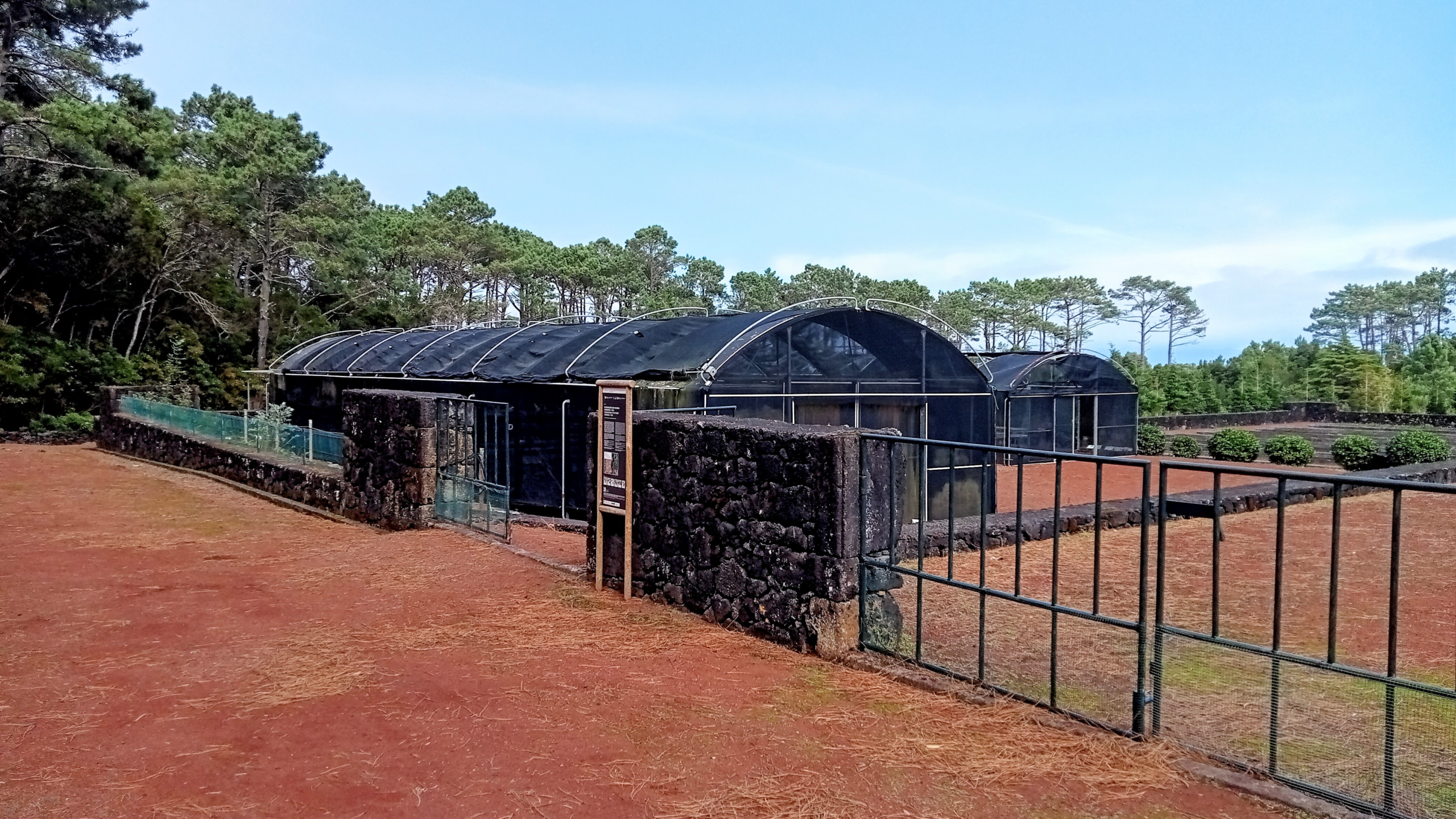
On the northern slopes of Pico Island, in the parish of Santa Luzia, lies one of the Azores’ most important guardians of native biodiversity—the Santa Luzia Forest Nursery (Viveiro Florestal de Santa Luzia). Managed by the Pico Forestry Service, this nursery plays a central role in restoring and preserving the island’s unique plant heritage.

Shaping Biodiversity on Volcanic Ground
Pico Island’s landscape is defined by its volcanic origin. Much of the soil is shallow, rocky, and still in early stages of formation. These challenging conditions have led to specialized forestry practices that set Pico apart from the rest of the archipelago.
The Pico Forestry Service oversees all nursery operations on the island, ensuring the continuous production of healthy, resilient plants used in reforestation, habitat restoration, and conservation projects.
The Santa Luzia Forest Nursery
Located 125 meters above sea level and covering 5,600 m², the Santa Luzia nursery is the beating heart of endemic plant production on Pico. Most species are propagated from seed, a process requiring patience, precision, and deep ecological knowledge.
One of its primary focuses is Juniperus brevifolia, the endemic Azorean juniper and a cornerstone of native laurel forest ecosystems. Alongside it, a wide variety of endemic trees and shrubs are grown, supporting long-term conservation goals across the island.
Supporting Nurseries Across Pico
While Santa Luzia specializes in endemic flora, Pico relies on additional nurseries to fill broader ecological needs.
The Sales da Câmara Nursery, at 190 meters altitude and spanning 30,000 m², produces large volumes of Cryptomeria japonica for Pico’s production forests.
The recently reactivated nursery at the Quinta das Rosas Forest Reserve, though modest at 770 m², now supplies ornamental species for public gardens and recreational spaces managed by the Forestry Service.
A Living Collection of Azorean Flora
Among the many species cultivated across these nurseries are:
- Azevinho – Ilex azorica
- Cedro do Mato – Juniperus brevifolia
- Dragoeiro – Dracaena draco
- Faia da Terra – Morella faya
- Folhado – Viburnum treleasei
- Ginjeira Brava – Prunus azorica
- Loureiro – Laurus azorica
- Pau Branco – Picconia azorica
- Sanguinho – Frangula azorica
- Urze – Erica azorica
- Uva da Montanha – Vaccinium cylindraceum
Each species supports the biodiversity, soil health, and climate resilience of Pico’s unique ecosystems.
How the Community Can Contribute—and Benefit
The Pico Forestry Service encourages local residents and visitors to take part in the island’s ecological recovery. Every Friday from 1:00 to 3:00 p.m., the Santa Luzia Nursery opens its doors to the public.
During this time, you can:
Visit the Nursery
Explore the facility, learn about propagation techniques, and discover the stories behind Pico’s endemic plants.

Take Home Plant Starters for free
The nursery offers young plants for those wishing to grow native species in their own gardens. By planting endemic species at home, residents directly contribute to preserving local biodiversity and supporting pollinators, birds, and soil health.
Support Conservation Efforts
By engaging with the nursery, you help strengthen the island’s ecological networks—ensuring that native species thrive both in managed forests and private gardens.
Growing the Future of Pico’s Forests
Through dedicated propagation, careful stewardship, and community involvement, the Pico Forestry Service and its network of nurseries are safeguarding the natural heritage of the island. The work done in Santa Luzia ensures that Pico’s forests—native and planted—remain vibrant, diverse, and resilient for generations to come.
The nursery is more than a place where plants grow. It’s where the future of Pico’s landscapes is nurtured—seed by seed, and increasingly, with the community’s helping hands.
See also the event calendar


