

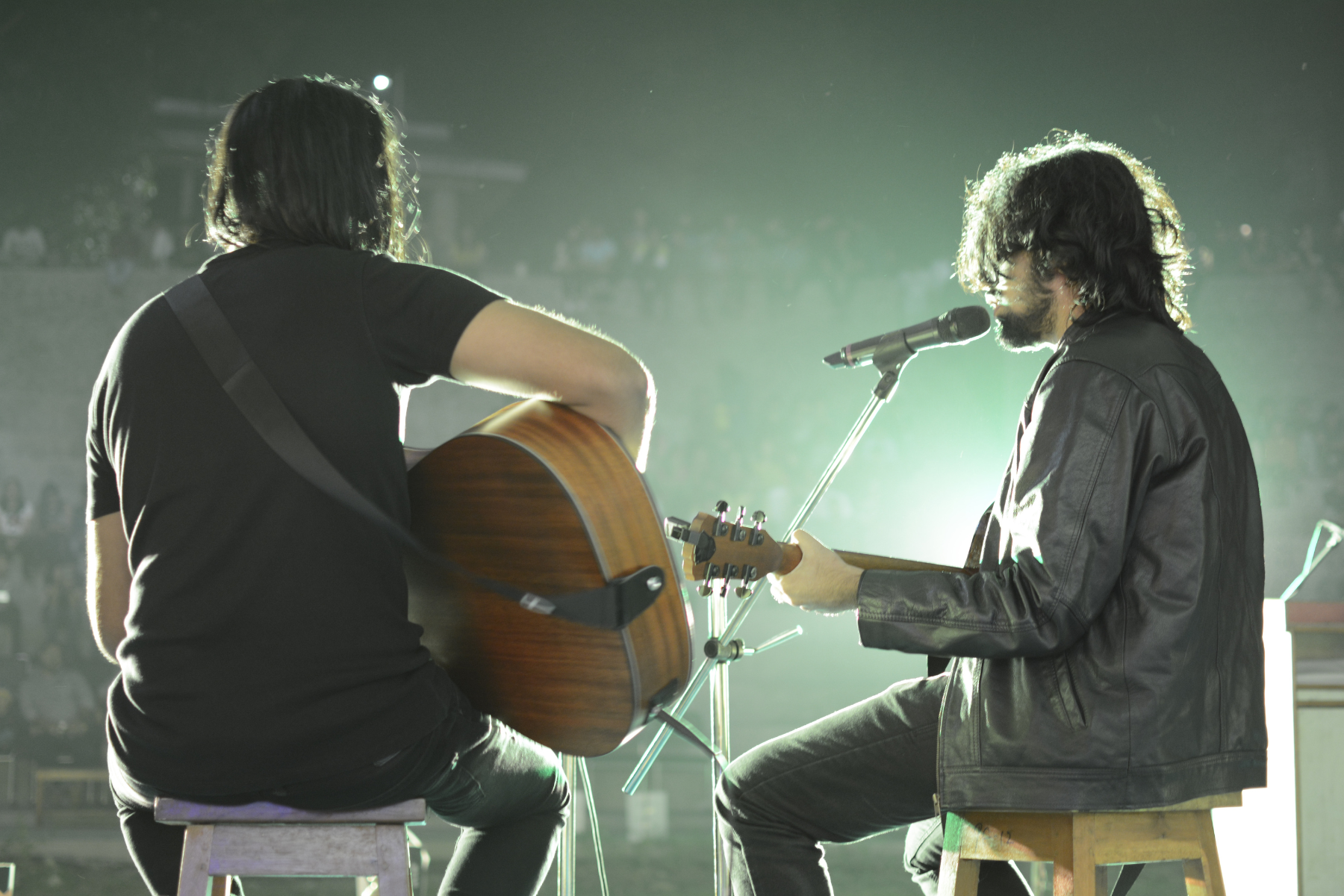
The Azores have always been places of transformation — crossroads for settlers, sailors, and migrants for centuries. Tradition, culture, and folklore run deep in daily life. They’re the foundation of today’s performance art: dance, music, and song.
Isolation never limited creativity here. Instead, it sparked it. Each village has its own philharmonic band and cultural centre where people gather to play, sing, and dance. Religion beats at the heart of these traditions, and many Azoreans first found their voices in church choirs.
Every summer, the islands burst into celebration. The Festas fill the streets with music, food, and friendship. Folklore dances like the Chamarrita link generations, keeping the rhythm of the past alive. During the 300th anniversary of Madalena, 812 dancers joined hands in a giant Chamarrita circle — a world record that showed how powerfully this tradition endures.
A Living Stage in the Middle of the Atlantic
On Pico Island, performance spills into everyday life. It’s not confined to theatres or stages. It happens in courtyards, village squares, and echoing churches. Music flows through open windows on Sunday mornings and drifts over vineyards in the evening air.
The island’s filarmónicas — community bands — form the backbone of cultural life. Each town has one, and everyone knows its members. For many, joining a filarmónica is a milestone. It teaches rhythm, teamwork, and pride.
Singing is just as important. Church choirs, folk groups, and family gatherings all echo with harmony. The songs tell stories of the sea, of love, and of longing — stories that mirror the island’s beauty and solitude.
The Festas: Where Faith and Joy Meet
When summer arrives, the Azores come alive. The Festas do Espírito Santo — centuries-old celebrations — transform every village. Streets bloom with flags and flowers. Brass bands march. Drums set the tempo for parades that move from dawn to dusk.
At the centre of it all lies generosity. Locals share food, laughter, and music. Long wooden tables stretch across squares, piled high with sopas do Espírito Santo — a hearty, comforting stew that tastes like home.
As night falls, the music shifts. Folk groups step onto makeshift stages, their costumes bright and proud. The Chamarrita begins — a spinning dance that draws everyone in. Its rhythm is infectious, its energy communal. Children, parents, and grandparents join hands, dancing in circles that blur the line between audience and performer.
Every note, every step, carries devotion and joy. These moments remind islanders who they are — and how their traditions still move them.
Tradition in Motion
Azorean art never stands still. It evolves. Young musicians and dancers take these old rhythms and make them new. They mix folk with jazz, pair accordion melodies with electronic beats, and turn age-old dances into modern choreography.
You might see a performer reimagining the Chamarrita as contemporary dance, or hear whale songs woven into an experimental music piece. These artists bridge worlds — past and present, local and global.
Even on distant stages, the spirit of the Azores shines through. It’s the pull of the sea, the strength of the land, and the warmth of community — all translated into motion and sound.
An Island That Dances
To experience Pico is to step into movement. The island hums with rhythm. Brass bands echo down cobblestone streets. Choirs lift their voices in stone churches. Dancers spin beneath summer skies.
Here, performance isn’t spectacle — it’s belonging. Every beat and breath connects people to each other and to the island itself. The Azores don’t just preserve tradition; they live it. And in living it, they transform life into art.
Join the Rhythm
For those eager to experience this living tradition firsthand, Pico’s cultural calendar is full of opportunities. Throughout the year, local cultural centres and art collectives offer music, dance, and performance workshops — from traditional Chamarrita lessons to contemporary movement and choral classes. Visitors and residents alike can find classes in the event calendar, a gateway to becoming part of Pico’s creative pulse. Here, art isn’t just observed — it’s shared, learned, and joyfully lived.


